Chemical Feeder
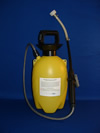 Reliable, lightweight feeder is provided for systems lacking traditional pot/shot/by-pass feeders. Portable pressure feeder requires no relief valves, gauges, timers, meters or electricity, and is nearly fail-proof. Replaces . Employs ambient air and pressure generated by a
hand-pump to feed treatment via any system faucet. Reliable, lightweight feeder is provided for systems lacking traditional pot/shot/by-pass feeders. Portable pressure feeder requires no relief valves, gauges, timers, meters or electricity, and is nearly fail-proof. Replaces . Employs ambient air and pressure generated by a
hand-pump to feed treatment via any system faucet.
Laboratory Report
Samples are analyzed the day they arrive, and results are recorded in a clean, color-coded layout. Reports are emailed to you and posted online in your client area, available for viewing any time.
Preventive Treatment
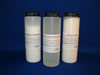 Each treatment chemical is packaged, pure and undiluted, Each treatment chemical is packaged, pure and undiluted,
in a small bottle as a unit dose, which is the quantity needed
to correct the chemistry of 1000 gallons of water. When treatment is required, the report indicates the number
of
unit doses to be added to the system.
Chemicals are:
- Approved system additives, with well-known protective mechanisms.
- Fed using any commercial chemical feeder or ones we supply.
- Chemically-compatible with one another.
- Effective at very low concentrations.
- Biodegradable and easy-to-handle.
- Safe to hold in general storage.
Dipotassium Phosphate
Also Known As: Phosphate
Action: pH-buffer, corrosion-inhibitor
Unit Dose: 15 pounds
Safe Zone: >1000 ppm
Kevlar Aramid Pulp
Also Known As: Kevlar
Action: stop-leak
Unit Dose: 5 grams
Safe Zone: NA
Quaternary Ammonium Chloride
Also Known As: Quat
Action: anti-microbial
Unit Dose: 1 ounce
Safe Zone: 5-10 ppm
Sodium Lauroyl Sarcosinate
Also Known As: Sarcosinate
Action: corrosion-inhibitor
Unit Dose: 8 ounces
Safe Zone: 30-50 ppm
Sodium Sulfite
Also Known As: Sulfite
Action: oxygen-scavenger
Unit Dose: 14 ounces
Safe Zone: 30-50 ppm
Sodium Tetraborate
Also Known As: Borate
Action: pH-buffer
Unit Dose: 12 pounds
Safe Zone: pH 9-10
Sampling Kit
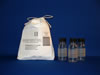 The kit will arrive at your door when it is time to sample. Everything you need to obtain a sample and mail it to our The kit will arrive at your door when it is time to sample. Everything you need to obtain a sample and mail it to our
lab is provided. Includes color-coded, customized labels,
clear instructions, and postage-paid return mailer.
Stop-Leak
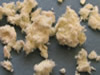 Kevlar Pulp has the perfect fiber size and geometry to flow through hydronic loop
pumps and pipes.
Supplied at
the proper dose, it quickly plugs holes smaller than 3/8",
but Kevlar Pulp has the perfect fiber size and geometry to flow through hydronic loop
pumps and pipes.
Supplied at
the proper dose, it quickly plugs holes smaller than 3/8",
but
does not interfere with valves or larger
system apertures.
System Monitor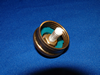
A system monitor consists of a filament of mild steel,
wrapped with a fine copper wire, and embedded in the
threads of a small nylon bolt. When in place on a system faucet, the system monitor experiences corrosion, scaling
and fouling at the same rate as the system. It provides direct, visual documentation of interior conditions. After a year of exposure, the system monitor is returned to the laboratory where it is graded, photographed and archived. The photograph is posted online in your client area, available for viewing any time.
|